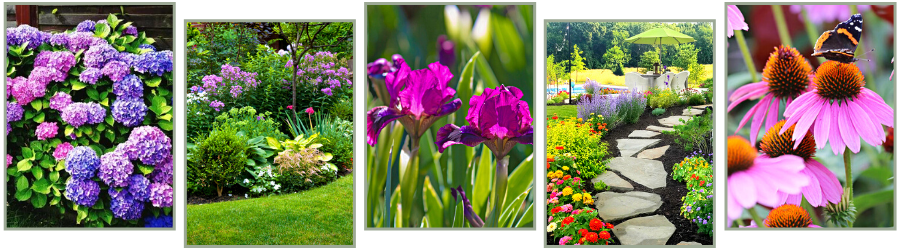
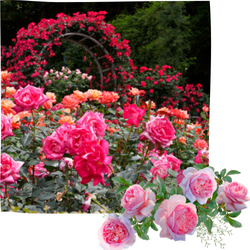
It’s every gardener’s dream: a beautiful landscape that’s big on color & texture and low on maintenance. Perennial gardens fit the bill beautifully! Filled with plants that return faithfully year after year, perennials are an easy way to grow a long-lived landscape that will bloom throughout the entire growing season. One afternoon spent planting a well-designed perennial bed will give you years of colorful, low-maintenance enjoyment. Let’s get growing!
Start with a Plan
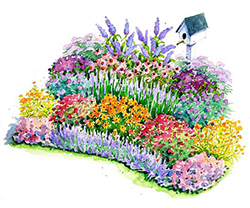
Smart gardeners always begin with a well-thought-out plan. It’s easier to erase a mistake on paper than it will be later on in the garden with a shovel. Begin by measuring your area, then sketch in permanent structures like fences or porches. Next, take note of how many hours of sun your new perennial bed will receive in various seasons. That way, when it’s time to choose your plants, you can begin with a palette of plants that will naturally thrive in the conditions where they’ll be planted.
Continue by roughly drawing in your desired plant choices. You’ll want to plan your perennial beds with a variety of differing heights, textures, and bloom times. This helps ensure there will be color in your garden from early spring right through to late autumn. You might even consider adding some evergreens and ornamental grasses for winter interest. Use our handy Plant Finder Tool to help you research and choose.
Pay Attention to Plant Height
Choose tall, dramatic plants for the background, medium-sized plants to provide mass in the center section, and shorter plants for the front. When planning your plant locations, be sure to draw in plants at their final, mature size. This will ensure your plants will have plenty of room when they reach full size and avoid overcrowding in years to come. Overcrowding reduces the ability of air to circulate, which can lead to disease and pest problems.
Get Ready to Plant
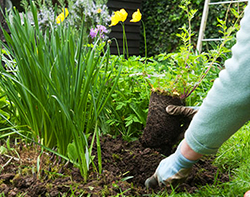
Before you plant, the single most important thing you can do to get your dream garden off to a strong start is to give your plants good healthy soil to grow in! You’ll want to add plenty of organic material to the native soil. The organic materials will help loosen heavy clay soils and add bulk to sandy soils, allowing them to retain moisture better. Layer 2″ of compost, peat, or composted manure onto the planting area. Blend this with existing soil to a depth of 4-6 inches. This works out to about four cubic yards of organic amendments per 1,000 square feet of native soil. Once your soil is prepared, you’re ready to plant.
Now for the fun part — stop by Echter’s, choose your plants, and bring them home! Spring is a wonderful time to get started on a perennial garden. Planting in the cooler temperatures helps those new perennials get off to a healthy start before the heat of summer comes on. Once you have your plants in place, give your garden a finished look by adding a layer of mulch. It will help control weeds while also acting to conserve water.
That’s it! With just a little elbow grease, you’ll be able to sit back and enjoy the beauty of your very own perennial garden. These long-lived plants will keep pumping out beautiful flowers year after year.
Stop in and see us! We have hundreds of different types of perennial plants for every landscaping fantasy, and our knowledgeable experts can help make your garden dreams a reality!
Fall is not the end of the gardening year. It is the start of next year’s growing season.”
~ Thalassa Cruso
Flower Gardens
Mums are frost hardy and are a great value for the spectacular show of color they provide. After the foliage freezes on your gladioli, cannas, dahlias, begonias and other tender summer-blooming bulbs dig them up, brush the dirt off, let them dry for a few days, then store them in vermiculite or peat moss and keep the medium moist throughout the winter.
Planting large pots of garden mums, asters, or flowering kale as you remove annuals from beds and borders gives you a spectacular show of color immediately.
Make notes on the past growing season’s gardening successes or disappointments while the details are still fresh in your mind. If you had problems, come in and we will try to help you turn them into successes.
Bulbs
October is the best month to plant your spring-flowering bulbs. Fertilize with bulb food, super phosphate or bone meal when you plant the bulbs. Water them in thoroughly after planting.When planting bulbs the pointed end of the bulb is positioned upward.
Plant small, early-flowering bulbs where they can be seen from indoors, since they bloom when it is usually too cold to enjoy them outside. Plant small, early flowering bulbs where they can be seen from indoors, since they bloom when it is usually too cold to enjoy them outside.
Perennials & Roses
Plant perennials at the same time you plant bulbs. You’ll be able to place perennial plants between your bulb groupings for color from spring to fall.
Many perennials and ornamental grasses add seasonal interest to the garden with attractive seed heads and plumes. Choose what you would like to remain intact and tidy up others by cutting back tall stems to the base foliage.
As the soil cools, apply mulch around perennial plants, especially those that have been recently planted.
Water roses less frequently and stop fertilizing to prepare them for winter dormancy.
Don’t forget to water monthly during the winter if there is no natural snow or rain.
Remove any foliage with fungal diseases such as powdery mildew and rust. Discard in the trash. Cleaning up now will help prevent a recurrence of the problem next year.
Cut back perennials leaving a 6 inch stub above the ground. Leave those with attractive seed heads for winter interest, such as coneflower and yarrow.
Leave the fronds of your outdoor ferns on the plant to protect the crowns. Prune out the old fronds in the spring when new shoots show in the spring.
Lawns
Green Thumb Winterizer should be applied in mid October. Your lawn will be nice and green in the spring.
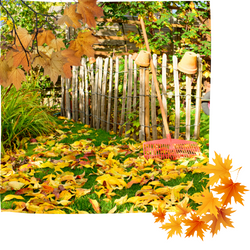
As leaves fall, rake them from lawns and add to compost or shred them and dig directly into your vegetable garden. Soggy mats of leaves on turf can lead to disease problems.
Leave your grass at a height of 2 ½” for the final mowing of the season. Continue to water as long as the temperatures remain above freezing. Give your lawn a good watering before you drain your sprinkler systems. Drain the system before the temperatures drop into the low twenties, to avoid freeze damage to the lines and sprinkler heads. Insulate and protect the vacuum breaker that is above ground before the first freezing weather.
Trees
In October, deep water trees and shrubs every three weeks thoroughly.
Do not fertilize trees now. If you had insect problems on your trees and shrubs, spray a dormant oil spray on the trunks and limbs to suffocate those insects that are overwintering in the cracks and crevices of the bark.
October is the best month to select trees and shrubs with fall color. Genetically, plants may differ in their fall beauty, so what you see in the nursery is what you’ll have in your yard.
If you see browning needles in your pines and spruces, do not panic. It is a normal phenomenon. In the fall these plants lose their oldest needles and keep three or four years of their newest growth.
Rake up all aspen leaves to reduce the chance of revival of any leaf-related disease you may have experienced. Dispose of these leaves and do not add them to your compost pile or incorporate them into your vegetable garden.
Vegetable Gardens
Prepare your vegetable garden soil this fall following your harvest because amending soil in the spring can be delayed if wet conditions prevail. Add Premier sphagnum peat moss, manure and Nature’s Yield Compost now. It will age and decompose over the winter and provide for earlier and easier planting next spring.
Rototill shredded leaves, garden debris, grass clippings and kitchen scraps, (excluding meat products) into your garden this fall. They will compost over the winter and greatly improve your garden soil next spring. Be sure the organic matter is insect and disease free.
Cut dead stalks of asparagus and trim raspberry canes which have borne fruit this year. Look for the leftover plugs at the top of the canes to tell which ones fruited this year. Divide rhubarb and transplant overcrowded roots after the first killing frost for improved production next year.
Indoor Plants
Holiday cactus need special care to get beautiful flowers this December. Buds will form for the holidays if you keep artificial light off them at night starting in mid October.
Your houseplants will benefit from a good leaching. Take them to your kitchen sink or bathtub and water twice or three times to remove built up soluble salts remaining from fertilizer or minerals from the water. If left, these salts can build up and burn the roots and browning the tips and margins of the leaves.
Amaryllis is the most majestic of all the holiday plants. To have blooms at Christmas, plant amaryllis bulbs 7-10 weeks earlier. Choose a pot about 2″ wider than the bulb and one that is heavy enough to keep from tipping. Fill the pot part way with potting mix. Set the bulb so that the top 1/3 of the bulb will be above the top of the soil when you fill the pot to 1″ below the top edge of the pot. Give the plant about 4 hours of bright light a day. Plant every 2 weeks for a spectacular color show all winter.
Feathered Friends
Feeding the birds outside during the winter is great fun for young and old alike. You do need to have the right foods for the birds you are trying to attract. Start early while there are plenty of birds around. Keep the feeding stations clean and full. Clean out bird houses and bird feeders to prevent the spread of diseases for next year’s families. Be sure to supply a water source for birds during the winter time.
Water Features
Get your pond ready for winter. Remove debris and clean the pond surface and filters. Remove old foliage and place plants into deeper water. Pond netting will keep fallen leaves and unwanted predators out of your pond.
October is the time to clean the organic matter from the bottom of your pond. Remember the yucky sludge from your pond makes an excellent addition to your compost pile.
Set up a deicer or aerator in your pond to ensure one area remains unfrozen and gasses can exchange for fish.
Empty fountains and remove pumps before freezing weather arrives. Cover fountains with fountain covers or bring them into the garage. Birdbaths must be coated with Thompson’s Water Sealant before winter if they are left outdoors. Use a birdbath heater to prevent the water from freezing.
After October 15, (or when the water temperature falls below 50º F) feed fish Tetra Pond Spring and Fall Diet. Stop feeding fish once you see ice along the edges of the water in the morning.
Miscellaneous
Be sure to rake your leaves in the fall, disposing of any diseased or insect-ridden leaves. Rake healthy leaves into a pile, chop them up with your lawn mower, and add the resulting mulch into your compost pile or rototill it into your garden.
It pays to have good quality tools and keep them in good condition because it causes the least amount of damage or stress to plants. It’s also easier on the gardener as your work will go faster.
Choose a pumpkin with a stem that is at least 2″ long. Pumpkins that are darker orange may last longer and are a bit tougher. When you get it home, clean it with soap and water to keep bacteria away. Protect from frost.
Stay warm while outside with a chimenea or fire pit. These outdoor “fireplaces” will keep you cozy warm while preparing your meal and entertaining outside.
Stop spiders, crickets, millipedes, earwigs and other bothersome bugs from coming into the house for the winter by spraying Green Thumb Home Pest Control around the foundation of your house and especially window wells.
Fall is a great time to relax, enjoy your patio and cook outdoors. Try adding apple, hickory or mesquite chips to your grill for a unique flavor.
Echter’s Plant Doctors are available during store hours seven days a week to answer your gardening questions. For accurate diagnosis, it helps to bring in a sample.
“It was June, and the world smelled of roses. The sunshine was like powdered gold over the grassy hillside.”
~ Maud Hart Lovelace
Flower Gardens
“Dead-head” (pinch off the spent blooms) on perennials, annuals and roses for longer flowering periods and more and larger blooms.
Want some color in a shaded area? Try begonias, impatiens, coleus, ivy geraniums, fuchsia, or lobelia. Watch for geranium budworm on geraniums and petunias. Besides the obvious destruction of the flowers, another telltale sign is tiny black droppings on leaves and the ground beneath the plants. The most effective treatment is to spray Eight insecticide every 10 days or treat organically with BT.
Shade your patio for late summer by planting annual vines, like morning glories, moon flowers, scarlet runner beans, or sweet peas.
Cut flowers for bouquets early in the morning and place the stems immediately into a bucket of water to keep them fresh until you are able to arrange them.
Stake your tall blooming flowers like gladioli, delphiniums, and cannas to keep the flowers showing and upright.
If you are going away on vacation this summer, water all your plants (indoors and out) thoroughly before you leave. A drip system with an automatic timer will assure you that your plants will be watered while you are gone.
Container Gardens
Container gardens and hanging baskets can need a lot of fertilizer in a short time. The only practical way to get enough fertilizer to them is with a water-soluble fertilizer like Jack’s Classic Blossom Booster.
Top off your planters and container gardens with a half-inch of Mini Nuggets bark mulch to help keep in the moisture.
Perennials & Roses
Prevent rose and perennial diseases like powdery mildew from taking hold by using a systemic fungicide before the problem appears. Once those diseases appear it is very difficult to control. Bee balm, phlox, columbines and lilacs are some of the plants prone to powdery mildew.
Fertilize your roses regularly for continuous, large and beautiful blooms. We also have rose fertilizer with a systemic insecticide for continuous insect control.
If you had rust or black spot on your roses last year, give them a good preventive spray to reduce the problem this year. You will have to repeat the spray according to the directions on the container.
Look for empty spaces where you could plant some bulbs this fall between perennials to add more color next spring. Our fall-planted bulbs arrive around Labor Day weekend.
Control grass in perennial flower gardens with Over the Top. It is unique in that it kills grass without damaging most perennials.
Shade your patio with perennial vines including trumpet, honeysuckle, clematis, Engelman ivy, wisteria and silver lace vine. Even grape vines work well to create a shady spot.
Pinch back asters and mums until mid July to encourage branching, compact growth and extra flowers.
Too much shade? Echter’s has many shade-loving plants. For perennials try ferns, hosta, forget-me-nots, lamium, astilbe, violas, columbine, hellebores, bergenia, lily of the valley, and many more.
Plant baby’s breath in your rose garden. It’s a great addition for any of your flower arrangements.
Grass has a very hard time growing under spruces and pines. To solve this problem, we suggest either mulching or planting one of several ground covers. Vinca, purpleleaf wintercreeper, ajuga, sweet woodruff, plumbago, creeping mahonia, and kinnikinnik are just a few suggestions for those difficult situations.
Use Mini Nuggets mulch or red cedar mulch in your flower beds. They will retain moisture and retard weeds from emerging.
Vegetable Gardens
Avoid overhead watering when tomatoes, peppers, squash, cucumbers, corn and other vegetables that need pollination are in flower as the pollen may be washed away, resulting in fewer fruits.
Remove the Season Starters from around your tomatoes, peppers, etc. before the weather turns hot.
Watch for tiny holes in radish and bean leaves. Flea beetles are most likely the problem. Spray or dust with Eight to take care of those tiny problems.
Ross netting over your fruit trees and raspberries will help keep birds and squirrels out of your fruit crops. In addition, bird-repelling scare tape will be beneficial in protecting your fruit for a while.
A floating row cover “tent” over your cabbage, broccoli and cauliflower will help eliminate cabbage loopers. If they are already present, a dusting of Eight dust will take care of this insect.
Mulch your annual flowers and vegetable garden after the soil has warmed. Use Mini Nuggets bark mulch for the summer, and then till it into the ground this fall to improve the soil structure.
All vegetables should be harvested early in the morning when it is cool, especially lettuce, spinach, herbs, peas, and beans. Pick edible pod or sugar pod peas when the seeds are barely visible for best quality. Continue fertilizing with a high phosphorus (the second number) fertilizer. Corn is an exception; it prefers a bit higher nitrogen (the first number) in the analysis.
Trellis your vining cucumbers, squash and small gourds to make more room for other vegetables. Trellising also improves air circulation and keeps the fruit off the ground.
Use soaker hoses or drip irrigation systems to get water directly to the plants’ roots. You can either lay the hose on top of the mulch next to the plant or under the mulch. This is the most efficient way to water your gardens.
Plant bee-attracting flowers in and near your vegetable garden to draw these pollinators to your crops. If you have to use an insecticide, use it very early in the morning or late in the evening to protect the bees. Harvest broccoli when the buds are still tight and before any flowers open.
Lawn Care
Those impossible weeds like bindweed, dandelions and thistle in your lawn can be controlled with Ferti-lome’s Weed Out or Weed Free Zone. These are the most effective weed killers you can buy.
If you fed your lawn in April, it’s time to put on another application of fertilizer before the summer heat arrives. A slow release fertilizer is a must for this time of year.
You can use your grass clippings either as mulch in your garden or in your compost pile. Clippings have valuable nutrients. If you used a weed killer over your whole lawn, don’t reuse the clippings from the next mowing.
The best part of the day to water our lawns is early morning while it is still cool and use a low-angle sprinkler that puts out large water drops for your lawn watering. This will reduce water loss due to evaporation. Use a sprinkler that fits the area to be watered to avoid run-off onto the sidewalk, driveway or street.
Trees & Shrubs
Container-grown trees, shrubs, roses, and perennials can be planted anytime during the summer. Planting early in the morning or in the cool of the evening reduces the stress on both the plant and the planter.
Protect your trees and shrubs from grass trimmers. The best way to protect these plants is to eliminate the grass directly around the tree, encircle it with weed barrier fabric, and cover the fabric with bark or rock mulch.
Watch for wasps or yellow-jackets in and around your trees (especially aspens). This may be a sign that there are aphids on the leaves. By ridding your trees of the aphids, the yellow-jackets will go away.
Prune spring-flowering shrubs and ornamental trees after they have finished blooming. Prune only the spent flowers of lilacs. Lilacs set their flower buds for the next year very soon after flowering, so don’t prune into the branches.
Placing weed barrier around trees and shrubs with about 3″ of mulch on top will retain the moisture that you put on your plants. Cut to the edge to slide fabric into place around the plants. Cut a large “X” into the fabric where each plant is so you can fold back the fabric as the plant grows. Be sure to keep the weed barrier and mulch about 4″ away from the trunk of your trees and shrubs.
Don’t be alarmed if you find tiny fruit on the grounds under your fruit trees. Fruit trees automatically drop poorly pollinated fruit. This is a natural occurrence. You can also help your crop by thinning the small fruit on the tree to six to eight inches apart. Leave the largest and healthiest fruit. This will make it easier on the tree and improve the quality of the fruit. This will also ease the weight on the branches.
Watch for deformed or mottled leaves on honey locust. Leafhoppers and pod gall midge are common insects on these trees. A good systemic insecticide will help rid your trees of these pests.
Spray your ash trees for the ash sawfly and aphids. We have sprayers that reach 30 feet, and can take care of these pesky insects early. Prevent re-infestation for one year by applying Ferti-lome Tree and Shrub Systemic Insect Drench with a watering can. This will also protect your ash trees from the deadly emerald ash borer which reached Colorado in 2013.
If you suspect spider mites on any trees, shrub or evergreen, you can do this simple test. Take a piece of white paper and shake the branch onto the paper and examine the paper to see if anything is moving.
Water Gardening
Once the temperature of your pond reaches 65 degrees, it is safe to set out tropical water lilies. Place water lily fertilizer tablets into the soil of your pots.
Water hyacinths and water lettuce are nature’s floating filters. They help oxygenate the water and keep algae growth down. Algae can also be controlled by a floating barley straw bale in the pond.
If you don’t have room or don’t want to dig a hole in your ground, you can still have a water garden. Use a large non-draining ceramic pot to create a small water garden. Add a couple of water plants and you are all set.
Feed your pond fish on a regular basis, but only what they can eat in five minutes.
Houseplants
Aloe plants are not only decorative, but also practical. They have a wonderful healing sap for rashes, cuts, burns and sunburns. Just break a stalk open, squeeze and apply. Keep an aloe plant among your houseplants.
Wildlife
Change the water in your birdbaths weekly and clean your bird feeders to prevent diseases.
Home
To control mosquitoes, drain all standing water, no matter how small the amount, including rain gutters, plastic sheeting, pipes, drains, trash cans, saucers under pots, etc.
Change the water and clean your birdbaths and wading pools at least once a week to keep mosquitoes from laying eggs in stagnant water.
Use Quick Kill Mosquitoes or Mosquito Plunks in your ponds and fountains to kill the mosquito larvae. These controls do not harm fish, birds or water plants.
Before you treat or spray lawns, houseplants, trees, shrubs or flowers, be sure your problem is identified correctly. Bring a sample of any plant problem in to Echter’s plant doctors for a correct solution to the problem.
Echter’s Plant Doctors are available during store hours seven days a week to answer your gardening questions. For accurate diagnosis, it helps to bring in a sample.